Advancing Sustainable Business Operations
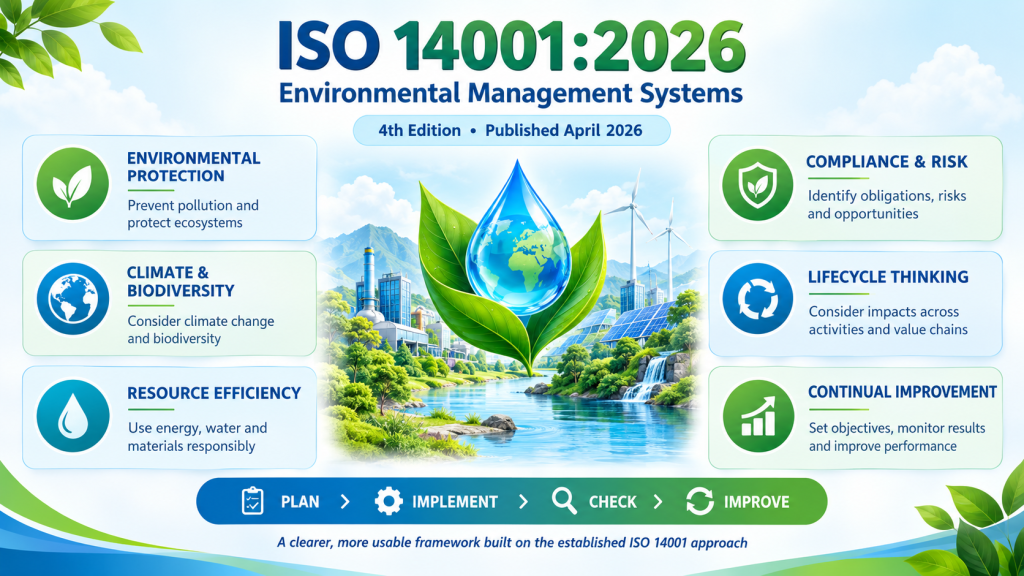
The International Organization for Standardization (ISO) has officially released the updated standard for Environmental Management Systems (EMS): ISO 14001:2026. Replacing the widely adopted ISO 14001:2015 version, this revision reinforces how organizations worldwide manage environmental risks, optimize resources, and navigate global sustainability challenges.
As an accredited management system certification body accredited by the Joint Accreditation System of Australia and New Zealand (JAS-ANZ), Business Systems Certification (BSC / BCert) is actively supporting clients across our global network to ensure a smooth, value-driven transition.
What Has Changed in ISO 14001:2026?
Rather than overhauling the core framework, ISO 14001:2026 modernizes the existing High-Level Structure (Annex SL Harmonized Structure) to better reflect today’s urgent ecological and regulatory priorities:
- Formal Integration of Climate Action (Clauses 4.1 & 4.2): Permanent incorporation of mandatory assessments concerning climate change vulnerability, biodiversity condition, resource availability, and ecosystem protection.
- Dedicated Clause for Planning of Changes (Clause 6.3): A structured requirement ensuring organizations formally plan, evaluate, and control management system modifications before execution.
- Extended Life-Cycle & Supply Chain Controls (Clause 8.1): Broadened control frameworks spanning externally provided processes, goods, and services from a life-cycle perspective.
- Standardized Documented Information: Clarified requirements ensuring operational information remains accessible, traceable, and reliable across both physical and digital formats.
The 3-Year Transition Timeline
In alignment with International Accreditation Forum (IAF) guidance, certified organizations are granted a standard three-year transition period ending in mid-2029:
| Milestone / Stage | Timeline | What It Means for Certified Organizations |
| New Standard Published | April 2026 | ISO 14001:2026 is published and becomes the new benchmark for environmental conformity. |
| Voluntary Upgrades | Present – 2027/2028 | Organizations can begin internal gap assessments and align operational procedures. |
| Transition Audits | 2027 – Early 2029 | BSC will conduct transition assessments concurrently during routine surveillance audits or recertification visits. |
| Transition Deadline | May 2029 | All existing ISO 14001:2015 certificates will expire or become invalid; all systems must be certified to ISO 14001:2026. |
Recommended Action Plan for BSC Clients
- Conduct an Internal Gap Analysis: Compare your existing context register (Clause 4), risk identification (Clause 6), and change control workflows against the ISO 14001:2026 clauses.
- Upskill Your Internal Audit Teams: Ensure internal auditors understand the nuances of the Harmonized Structure and enhanced life-cycle expectations.
- Plan Your Audit Cycle: You do not need an immediate stand-alone assessment; coordinate your transition audit with your regularly scheduled BSC annual surveillance or three-year reassessment audit.
How Business Systems Certification Supports You
BSC delivers certification processes centered on business value, technical competence, and strict impartiality:
- Transition Readiness Assessments & Gap Reviews: Independent evaluations to benchmark readiness prior to formal transition audits.
- Integrated Audit Schedules: Harmonize your ISO 14001:2026 upgrade with your ISO 9001 (Quality) or ISO 45001 (OH&S) audits to minimize duplication and operational disruption.
- Global Auditor Network: Benefit from experienced auditors providing practical, constructive feedback benchmarked to international best practice.
For questions regarding your transition timeline or to request a transition proposal, or contact your dedicated certification manager at info@bscertification.com.